

Most property owners treat upholstery cleaning as an aesthetic chore. In reality, soft furnishings act as the primary structural filter for indoor air quality in Australian homes. Because modern indoor spaces in metropolitan areas like Sydney, Melbourne, and Brisbane are tightly sealed, fabric fibers and sub-padding absorb daily layers of fine dust, atmospheric pollen, and localized humidity.
When deep contaminants settle into furniture, standard household vacuuming lacks the water-lift capacity and temperature control needed to break down subsurface bonds. True upholstery restoration requires specialized extraction systems calibrated explicitly to a textile’s manufacturing code.
Regular professional cleaning improves indoor air quality, reduces allergen concentration, and extends furniture lifespan.
Let’s read the blog to make you understand about upholstery cleaning and its importance.
What Is Upholstery Cleaning?

Upholstery cleaning is the professional deep cleaning of fabric and leather furniture to remove trapped dirt, stains, oils, allergens, and bacteria from both the surface and inner padding.
It is not the same as regular vacuuming or wiping. It involves targeted methods selected according to fabric type and the manufacturer’s cleaning codes.
Sofas, chairs, cushions, and mattresses absorb dust, sweat, pet dander, food crumbs, and airborne particles every day.
The United States Environmental Protection Agency states that indoor air often contains higher pollutant levels than outdoor air. Upholstered furniture contributes to this buildup because fabric fibers hold microscopic particles that circulate back into the air.
Professional upholstery cleaning uses hot water extraction, low-moisture foam, or solvent-based systems depending on the material. These methods penetrate deep into fibers and padding where household tools cannot reach.
Regular cleaning restores color, softness, and freshness while improving hygiene. Proper maintenance protects furniture investment and supports healthier indoor living environments.
Types of Upholstery That Require Cleaning
Different types of upholstered furniture require cleaning based on how they are used, what material they are made from, and the environment they are placed in.
High-traffic furniture collects soil much faster than rarely used pieces.
Here is the upholstery you need to clean:
- Fabric Sofas and Couches
- Leather Upholstery
- Office Chairs and Commercial Furniture
- Mattresses and Cushions

1. Fabric Sofas and Couches
Fabric sofas and couches are the most heavily used upholstered items in most homes. Families sit on them daily, pets rest on them, and food or drinks often spill on them.
Cotton, polyester, microfiber, and blended fabrics trap dust and fine particles deep inside their fibers. Textile research shows that porous fabrics hold more airborne pollutants than hard surfaces because their structure allows particles to settle and remain embedded.
That is why sofas slowly lose brightness and develop a dull look even when stains are not obvious.
Body oils and sweat also accumulate gradually. Over time, this buildup causes darkened headrests and arm areas.
Professional upholstery cleaning removes this deep soil using controlled extraction methods that protect the fabric’s texture and color.
2. Leather Upholstery
Leather upholstery requires a different cleaning approach because it behaves differently from fabric. Leather does not absorb dust in the same way, but it absorbs oils, sweat, and environmental pollutants.
Without routine cleaning and conditioning, leather loses moisture. When moisture balance decreases, the surface becomes stiff and begins to crack. Material testing in leather care studies shows that untreated leather deteriorates faster in dry indoor environments due to reduced flexibility.
3. Office Chairs and Commercial Furniture
Office chairs and commercial seating experience constant use throughout the workday. Employees sit for hours, and shared spaces increase exposure to dust, bacteria, and food residue.
Research conducted by the University of Arizona found that office chairs can carry significant bacterial contamination when not cleaned regularly. Shared workspaces increase the transfer of microbes through fabric contact.
Commercial upholstery cleaning focuses on both hygiene and durability. Businesses often schedule cleaning every six to twelve months depending on traffic levels.
Routine maintenance supports workplace health standards and improves the professional image of the space.
4. Mattresses and Cushions
Mattresses and cushions quietly collect sweat, dead skin cells, and allergens every night. Unlike visible furniture, their contamination often remains hidden.
Studies from Ohio State University indicate that mattresses can contain millions of dust mites within a few years if not properly maintained. Dust mites feed on skin flakes and thrive in warm, soft environments.
Deep upholstery cleaning removes embedded allergens and reduces dust mite populations. High-temperature steam extraction significantly lowers allergen levels in padded materials.
For households with pets, children, or allergy sufferers, regular mattress and cushion cleaning improves hygiene and sleeping conditions. Maintaining these items reduces odor buildup and extends their usable life.
Common Upholstery Fabrics and How They Are Cleaned
Different upholstery fabrics react differently to moisture, heat, and cleaning chemicals. Identifying the exact material ensures the safest and most effective cleaning method. Using the wrong technique can cause shrinkage, color fading, fiber distortion, or permanent damage.

1. Cotton
- Natural and breathable fabric commonly used in sofas and cushions
- Absorbs spills and body oils quickly due to porous fiber structure
- Usually cleaned with controlled hot water extraction under low moisture settings
- Requires balanced pH solutions to prevent color fading or shrinkage
- Proper drying is essential because excess moisture can weaken fibers
2. Polyester
- Durable synthetic fiber known for stain resistance and strength
- Repels moisture better than natural fabrics, reducing deep absorption
- Responds well to steam cleaning and low-moisture encapsulation methods
- Dries faster compared to cotton or wool upholstery
- Maintains shape and texture when cleaned with moderate heat
3. Velvet
- Soft fabric with a raised pile that gives a smooth, plush finish
- Sensitive to heavy water exposure which can flatten or distort fibers
- Typically cleaned using low-moisture foam or specialized dry cleaning techniques
- Requires gentle brushing after cleaning to restore pile direction
- Over-agitation can permanently affect its appearance
4. Silk
- Delicate and luxury upholstery fabric with fine natural fibers
- Highly sensitive to water and alkaline cleaners
- Requires solvent-based dry cleaning to prevent spotting and discoloration
- Must be handled with minimal agitation to avoid fiber breakage
- Professional treatment helps preserve sheen and color consistency
5. Wool
- Natural fiber valued for durability and resilience
- Sensitive to high heat and strong alkaline chemicals
- Cleaned using neutral pH solutions and controlled moisture levels
- Requires careful drying to prevent odor development or fiber distortion
- Maintains longevity when cleaned with low heat extraction methods
6. Microfiber
- Synthetic fabric with tightly woven fibers that resist staining
- Attracts oils and fine dust particles over time
- Suitable for steam cleaning or solvent cleaning depending on manufacturer code
- Dries quickly due to low absorption rate
- Maintains softness and structure when cleaned with minimal water use
7. Synthetic Blends
- Combination of natural and synthetic fibers designed for durability and comfort
- Cleaning method depends on the dominant fiber composition
- May allow both water-based and solvent-based cleaning depending on label code
- Requires spot testing before full cleaning to ensure color stability
- Professional assessment prevents uneven texture or discoloration
Upholstery Cleaning Codes and What They Mean

Upholstery cleaning codes are short manufacturer labels that tell you which cleaning method is safe for your furniture fabric. They are designed to prevent shrinkage, fading, water stains, and fiber damage caused by using the wrong cleaning product.
These codes are usually printed on a tag located under seat cushions or beneath the furniture frame. Checking the code before cleaning protects both the fabric and the internal padding.
- W Code: W means water-based cleaning solutions are safe, including steam cleaning or hot water extraction.
- S Code: S means solvent-based cleaners only, and water should not be used on the fabric.
- WS Code: WS means both water-based and solvent-based cleaning methods are acceptable.
- X Code: X means vacuuming only, and no water or solvent cleaning should be applied.
How to Check Your Furniture Cleaning Code
Look for a fabric care tag under the cushions or attached to the bottom frame of the furniture. If no label is present, contact the manufacturer before attempting deep cleaning to avoid permanent damage.
Upholstery Cleaning Methods Explained
Upholstery cleaning methods are selected based on fabric type, cleaning code, soil level, and moisture tolerance. The right method removes deep dirt without shrinking, fading, or weakening the material.

Below are the main upholstery cleaning methods explained in a clear and practical way.
1. Steam Cleaning Hot Water Extraction
Steam cleaning, also known as hot water extraction, is the most common professional upholstery cleaning method. It works by injecting heated water mixed with cleaning solution into the fabric and then immediately extracting it along with dissolved dirt.
This method reaches deep into the fibers and padding. It removes trapped dust, bacteria, allergens, and body oils that normal vacuuming cannot reach.
Industry training bodies such as the Institute of Inspection Cleaning and Restoration Certification recognize hot water extraction as one of the most effective deep cleaning systems for textiles.
It is best for:
- Synthetic fabrics with W or WS cleaning codes
- Heavily used sofas and sectionals
- Homes with pets or allergy concerns
Drying usually takes four to eight hours depending on humidity and airflow.
2. Dry Cleaning Method
Dry cleaning uses solvent-based solutions instead of water. It is designed for fabrics labeled with an S cleaning code, which means water can damage the material.
The solvent breaks down oil-based stains and lifts dirt without soaking the fabric. This method reduces the risk of shrinkage, water stains, and texture distortion.
It is commonly used for:
- Silk upholstery
- Delicate vintage furniture
- Fabrics that react poorly to moisture
Dry cleaning also offers faster drying times compared to water-based methods.
3. Foam Cleaning
Foam cleaning uses a low-moisture foam that is applied to the surface of the upholstery. The foam surrounds dirt particles and lifts them to the surface for removal.
Because it uses less water, it is helpful in environments where quick drying is important. Foam cleaning is suitable for moderately soiled furniture but may not remove deeply embedded contaminants like hot water extraction does.
It works well for:
- Light maintenance cleaning
- Office furniture that needs quick turnaround
- Fabrics that tolerate light moisture
Drying time is usually shorter than steam cleaning.
4. Shampooing
Shampooing involves applying a foaming cleaning solution and agitating it into the fabric using a brush or machine. It was widely used in the past for heavy soil removal.
While shampooing can break down stubborn dirt, it may leave residue if not properly rinsed. Modern professionals often combine shampooing with extraction to prevent sticky buildup.
It is typically used when:
- Furniture has visible heavy soil
- Pre-treatment is required before deep extraction
5. Encapsulation Cleaning
Encapsulation is a low-moisture method that uses specialized polymers. These polymers surround dirt particles and crystallize them as they dry.
Once dry, the residue can be vacuumed away easily. This method uses minimal water and dries quickly, which reduces the risk of mold or odor development.
Encapsulation is often chosen for:
- Commercial environments
- Maintenance cleaning schedules
- Situations requiring fast drying
Although effective for surface and moderate soil, it may not replace deep extraction for heavily soiled furniture.
6. Leather Conditioning and Treatment
Leather requires a completely different cleaning approach than fabric upholstery. The process begins with gentle surface cleaning to remove dust and body oils.
After cleaning, a conditioning product is applied to restore moisture balance. Leather naturally loses oils over time, especially in air-conditioned or heated environments. Without conditioning, it becomes dry, stiff, and prone to cracking.
Professional leather treatment helps:
- Maintain flexibility
- Prevent surface cracks
- Preserve color and texture
- Extend furniture lifespan
Regular leather cleaning and conditioning every 12 to 18 months keeps the material soft and durable.
Step-by-Step Upholstery Cleaning Process
Professional upholstery cleaning follows a clear and structured workflow that removes deep dirt while protecting the fabric. Each step builds on the previous one, so skipping any stage reduces effectiveness and increases the risk of damage.
A proper cleaning process is not rushed. It is controlled, tested, and adjusted according to the material and soil condition. That is what separates surface cleaning from professional deep cleaning.

1. Inspection and Fabric Identification
Inspection is the foundation of the entire process. Professionals identify the fabric type, manufacturer cleaning code, level of soiling, and any existing damage before applying any product.
This stage usually takes 5 to 15 minutes but prevents costly mistakes. Even fabrics that look similar can react differently depending on age, dye stability, and fiber blend.
During inspection, technicians check:
- Cleaning code label
- Color fastness with a small hidden test
- Type of stains such as oil, ink, food, or pet accidents
- Weak seams or worn areas
Proper inspection increases cleaning accuracy and reduces shrinkage or discoloration risks.
2. Pre-Vacuuming
Pre-vacuuming removes loose dust, hair, crumbs, and dry soil from the surface and crevices. Research in textile maintenance shows that up to 70 percent of soil inside upholstery is dry particulate matter.
If this dry soil is not removed first, it turns into muddy residue during wet cleaning. That reduces cleaning effectiveness.
Professional vacuums use strong suction and HEPA filtration. HEPA filters capture microscopic particles and reduce airborne dust during the process. This improves hygiene even before deep cleaning begins.
3. Pre-Treatment of Stains
Pre-treatment focuses on visible stains and heavily used areas such as armrests and headrests. Technicians apply targeted cleaning agents based on stain type.
Oil-based stains require solvent-based solutions. Protein-based stains such as food or sweat respond better to enzyme cleaners.
Allowing proper dwell time is important. Rushing this step reduces stain breakdown and forces unnecessary scrubbing. Gentle agitation protects fibers and improves results without weakening the fabric.
4. Deep Cleaning Process
Deep cleaning removes embedded soil from within the fabric and cushion padding. The chosen method depends on the cleaning code and material.
The most common professional methods include:
| Cleaning Method | Best For | Key Benefit |
| Hot Water Extraction | Most W and WS fabrics | Deep removal of dirt and allergens |
| Dry Solvent Cleaning | S-coded delicate fabrics | No water exposure |
| Low-Moisture Foam | Light to moderate soil | Faster drying time |
| Encapsulation | Commercial furniture | Reduced moisture and quick turnaround |
Hot water extraction remains the most widely used technique. Industry data indicates that properly performed extraction can remove up to 90 percent of allergens and bacteria trapped in upholstery fibers.
The machine sprays heated cleaning solution into the fabric and immediately extracts it along with suspended soil. Controlled pressure prevents over-wetting.
5. Spot Treatment
Spot treatment is performed after deep cleaning to correct any remaining marks. This step requires precision.
Technicians use small amounts of specialized solutions and controlled blotting techniques. Over-wetting at this stage can cause water rings or uneven drying.
Spot correction improves uniform color and overall appearance.
6. Drying and Final Inspection
Drying is critical for preventing odor and microbial growth. Moisture trapped inside cushions can lead to mold development within 24 to 48 hours if not properly dried.
Professionals use air movers to accelerate evaporation. Depending on humidity and fabric thickness, drying typically takes between four and eight hours.
Final inspection ensures:
- Stains have been properly treated
- Fabric texture remains intact
- No discoloration occurred
- Cushions are evenly dried
This closing stage confirms that the cleaning meets professional quality standards.
Why Upholstery Cleaning Is Important
Upholstery cleaning protects health, preserves furniture structure, and improves indoor living conditions. Soft furniture collects dust, skin cells, oils, and airborne pollutants every day.
Without deep cleaning, these contaminants build up inside fibers and padding where normal vacuuming cannot reach.
- Clean upholstery reduces allergens such as dust mites and pet dander, which are common indoor triggers.
- Professional deep cleaning removes bacteria and microbial buildup, especially in humid environments.
- Regular maintenance prevents dirt from breaking down fabric fibers and causing early wear.
- Deep extraction improves indoor air freshness by removing trapped particles from cushions and padding.
How Often Should Upholstery Be Cleaned?
Upholstery cleaning frequency depends on usage, environment, and household conditions. Most experts recommend professional cleaning every 12 to 24 months.

The following table provides a clear guideline based on environment and usage level.
| Environment Type | Usage Level | Recommended Professional Cleaning | Why This Frequency Matters | Additional Maintenance |
| Standard Residential Home | Moderate daily use | Every 12 to 18 months | Prevents gradual soil buildup and fiber wear | Vacuum weekly and spot clean spills immediately |
| Luxury or Light-Use Furniture | Low use | Every 18 to 24 months | Maintains fabric freshness and prevents dust accumulation | Dust and vacuum monthly |
| Homes With Pets | High | Every 6 to 12 months | Reduces pet dander, odors, and allergen concentration | Frequent vacuuming with HEPA filter |
| Homes With Children | High | Every 6 to 12 months | Removes food spills, bacteria, and heavy soil | Immediate stain treatment |
| Allergy-Sensitive Households | Moderate to High | Every 6 to 12 months | Controls dust mites and airborne irritants | Use air purifiers and vacuum twice weekly |
| Commercial Offices | High traffic | Every 6 to 12 months | Maintains hygiene and professional appearance | Scheduled maintenance contracts |
| Hotels and Hospitality | Very high | Every 3 to 6 months | Prevents visible wear and odor buildup | Routine inspection and rapid stain response |
| Medical or Healthcare Waiting Areas | Continuous public use | Every 3 to 6 months | Supports sanitation standards and infection control | Strict cleaning compliance protocol |
How Much Does Upholstery Cleaning Cost?
Upholstery cleaning cost in Australia depends on furniture size, fabric type, soil level, and the cleaning method used. Most professional companies charge per item, which makes pricing clear and predictable for homeowners.
Across major Australian cities such as Sydney, Melbourne, and Wollongong, the average cost to professionally clean a standard three-seater sofa ranges between 120 and 250 AUD. Armchairs usually range from 40 to 90 AUD, while larger sectionals can cost between 200 and 400 AUD depending on size and cushion count.
What Affects the Final Upholstery Cleaning Price?
Fabric composition plays a major role in pricing. Natural fibres such as wool and silk require gentler products and more careful handling. Synthetic materials usually respond well to steam cleaning and may cost less to treat.
Stain severity influences labour time. Old stains often require enzyme treatment or targeted spot removal techniques.
Location also affects pricing. Services in metropolitan areas may cost slightly more due to operating expenses, while regional areas sometimes include travel charges.
Additional services increase the total cost. Fabric protection treatment creates a stain-resistant barrier and usually adds 20 to 50 AUD per item. Deodorising and sanitising treatments may also add to the final quote.
Learn more about upholstery cleaning cost
Signs Your Upholstery Needs Professional Cleaning
Upholstery shows clear warning signs when deep cleaning becomes necessary. These signs often appear gradually, so many homeowners ignore them until damage becomes visible.
Paying attention early helps protect both fabric and indoor air quality.
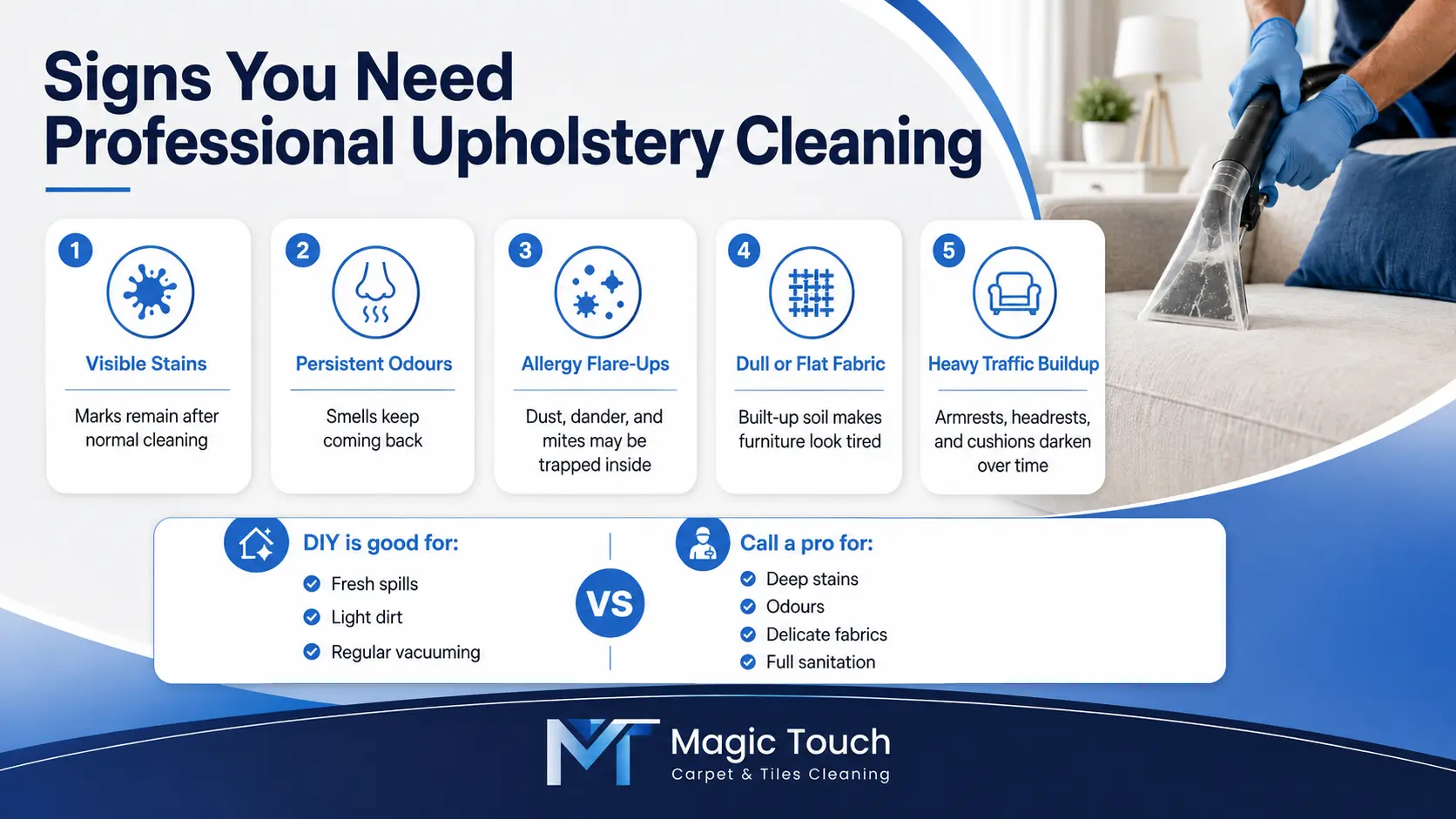
- Visible Stains: Visible stains that remain after basic cleaning usually mean dirt has penetrated deep into the fibers. Spills soak into cushions quickly and settle below the surface. Professional cleaning reaches inside the padding and removes what normal wiping cannot.
- Persistent Odors: Persistent odors often come from moisture, sweat, food particles, or pet accidents trapped inside the fabric. Sprays only cover the smell for a short time. Deep extraction removes the source of the odor instead of masking it.
- Allergies or Respiratory Issues: Frequent sneezing, coughing, or itchy eyes inside the home may link to dust, pet dander, and dust mites stored in upholstery. Soft furniture collects airborne particles daily. Professional cleaning reduces these irritants and improves indoor comfort.
- Dull Appearance or Fabric Wear: Fabric that looks faded, flat, or rough usually contains embedded dirt. Soil buildup causes friction that slowly damages fibers. Deep cleaning refreshes texture and restores a cleaner, brighter appearance.
DIY Upholstery Cleaning vs Professional Cleaning
DIY upholstery cleaning refers to using household tools, supermarket sprays, or rented machines to clean sofas and chairs at home.
Professional upholstery cleaning relies on commercial-grade extraction systems, fabric testing, and trained technicians who follow manufacturer cleaning codes.
Both options serve different purposes. The right choice depends on the fabric type, stain severity, and hygiene needs.
When DIY Cleaning Is Safe
DIY upholstery cleaning works best for light surface dirt and fresh spills on water-safe fabrics marked with a W or WS cleaning code. Quick action makes a real difference.
Blotting a spill within the first few minutes prevents liquid from soaking deep into the padding. Regular vacuuming also plays a major role. Textile maintenance research shows that most loose upholstery soil is dry particulate matter, and removing it weekly reduces long-term fiber damage.
Mild, pH-balanced upholstery cleaners can manage minor marks. However, over-wetting is one of the most common mistakes in DIY cleaning. Excess moisture can seep into foam cushions and take days to dry, especially in humid conditions.
DIY care works well as routine maintenance between deeper professional services. It helps keep furniture fresh and extends the time between major cleanings.
When to Hire Professionals
Professional upholstery cleaning becomes necessary when stains remain after basic treatment, odors persist, or the fabric looks dull and flat even after vacuuming. These signs usually indicate soil embedded deep inside the fibers and padding.
Hot water extraction systems used by professionals operate at significantly higher pressure and suction levels than rental machines.
This allows deeper removal of dirt, bacteria, and allergens. Industry data shows that professional extraction can remove a high percentage of trapped contaminants compared to standard consumer equipment.
Trained technicians also understand fabric sensitivity. Delicate materials such as velvet, wool, or silk require precise temperature control and correct chemical balance. Incorrect cleaning can lead to shrinkage, dye bleeding, or texture damage.
In Australia, climate conditions also play a role. Humidity and temperature fluctuations can affect drying times and mold risk.
Professional services such as Magic Touch Carpet and Tiles Cleaning follow controlled drying procedures to prevent moisture from remaining inside cushions. Proper airflow management and inspection reduce the chance of long-term damage.
Frequently Asked Questions
What’s the average price to clean a sofa?
The average cost of professional sofa cleaning in Wollongong depends on the furniture size, fabric type, and stain condition. Most standard 3-seater sofas cost between $120 and $250, while larger sectionals, delicate fabrics, and leather upholstery cleaning services may cost more.
Is it better to clean a sofa yourself or hire a professional?
DIY cleaning works for light dust, vacuuming, and fresh spills, but professional upholstery cleaning services provide deeper cleaning for stains, odours, allergens, and bacteria trapped inside the fabric and padding. Professional couch cleaning also helps protect delicate materials from shrinkage or damage.
What are common upholstery cleaning mistakes?
Common upholstery cleaning mistakes include using too much water, applying the wrong cleaning chemicals, scrubbing stains aggressively, ignoring the fabric cleaning code, and failing to dry the furniture properly. Incorrect DIY cleaning can damage fabric, leave water marks, or cause mould growth inside cushions.
Can upholstery cleaning remove pet odours?
Yes. Professional upholstery cleaning can remove pet odours by extracting urine residue, pet dander, bacteria, and trapped oils from deep within the furniture fabric and padding. Deep sofa cleaning and deodorising treatments help eliminate the source of the smell instead of masking it.
How often should upholstery be professionally cleaned?
Most homes should schedule professional upholstery cleaning services every 12 to 18 months. Homes with pets, children, allergies, or heavy furniture use may benefit from couch cleaning or mattress cleaning every 6 to 12 months to maintain hygiene and indoor air quality.
How do I choose the best upholstery cleaning service in Wollongong?
Choose the best upholstery cleaning service in Wollongong by looking for local experience, strong customer reviews, clear pricing, insurance, and fabric-safe cleaning methods. A trusted company should inspect your furniture first, check the fabric cleaning code, and recommend the right treatment for sofa cleaning, couch cleaning, leather upholstery cleaning, mattress cleaning, and other professional upholstery cleaning services.
Conclusion
Upholstery cleaning is a deep fabric care process that removes embedded dirt, allergens, oils, and bacteria from sofas, chairs, mattresses, and other padded furniture. It protects both appearance and hygiene while preserving the strength of the material.
Furniture absorbs dust, body oils, pet dander, and airborne particles every day. Over time, these contaminants settle deep inside the fibers and padding.
Indoor air research shows that soft surfaces act as reservoirs for pollutants, which explains why neglected upholstery often affects air freshness and comfort inside a home or office.
