

Tile surfaces cover billions of square meters in residential and commercial buildings worldwide, and maintenance studies in facility management consistently show that improper cleaning shortens floor lifespan, increases slip risk, and raises long-term restoration costs by up to 30 percent over five years.
Ceramic, porcelain, natural stone, quarry, glass, and terracotta tiles differ in porosity, mineral composition, and chemical sensitivity, which directly affects how they react to moisture, heat, pressure, and cleaning agents.
Public health and building performance research also links poorly maintained tile and grout to higher microbial growth in humid environments, especially where relative humidity exceeds 60 percent.
Correctly matching tile cleaning type to material, stain source, and location preserves structural integrity, improves hygiene, and reduces lifecycle maintenance expenses.
In this guide, I will explain how to choose the correct type of tile cleaning based on material, cleaning method, and specific problems such as grease, mould, hard water, or grout discolouration.
6 Types of Tile Cleaning Based on Tile Material

Tile material determines cleaning safety, water tolerance, chemical compatibility, and long-term maintenance cost. Each tile type has a different porosity level and mineral structure, which directly affects how dirt behaves and how cleaning should be performed.
Below is a quick material comparison before detailed explanations.
Quick Comparison of Tile Materials and Cleaning Needs
| Tile Type | Water Absorption | Acid Sensitivity | Sealing Needed | Common Risk | Best Routine Method |
| Ceramic | Low | Low | No | Surface scratching | Sweep + Neutral mop |
| Porcelain | Very Low (<0.5%) | Low | No | Surface haze from residue | Microfiber mop + Steam |
| Marble | Medium | Very High | Yes | Etching | pH-neutral stone cleaner |
| Granite | Low-Medium | Moderate | Yes | Dullness over time | Neutral cleaner + Soft pad |
| Slate | Medium | Moderate | Yes | Surface flaking | Low-moisture cleaning |
| Glass | None | None | No | Water spotting | Microfiber wipe |
| Quarry | High | Low | Recommended | Grease absorption | Degreaser + Scrub |
| Terracotta | Very High | Moderate | Yes | Deep staining | Gentle wash + Reseal |
Now each material is explained clearly so there is no confusion about what to use and what to avoid.
1. Ceramic Tile Cleaning
Ceramic tile cleaning focuses on protecting the glazed top layer while maintaining clean grout lines. The glaze acts like a protective shield, but it can scratch under abrasive pads or gritty debris.
Daily dry sweeping is essential because loose dust behaves like sandpaper under foot traffic. Floor durability studies show that removing dry soil can reduce visible surface wear by more than 30 percent over time.
Weekly damp mopping with warm water and neutral cleaner is enough for most homes. Strong acidic cleaners gradually break down the glaze. Highly alkaline cleaners strip shine if used repeatedly.
For deeper cleaning:
- Use a soft nylon brush on grout
- Avoid metal scrubbers
- Limit harsh degreasers
- Use steam only occasionally
Ceramic is durable but not immune to surface damage. Consistency keeps it glossy without aggressive scrubbing.
2. Porcelain Tile Cleaning
Porcelain tile cleaning requires less water and fewer chemicals because porcelain is extremely dense. Industry standards classify porcelain as having water absorption below 0.5 percent.
Because of this low absorption rate, stains rarely penetrate deeply. Most dirt remains on the surface. That is why microfiber mopping systems work so effectively.
In commercial facilities, microfiber tools reduce chemical usage by approximately 20 percent while maintaining hygiene standards. This makes porcelain a preferred choice in hospitals, malls, and airports.
Effective porcelain cleaning includes:
- Daily dust removal
- Damp mopping with neutral solution
- Steam cleaning for sanitation
- Avoiding wax buildup
Porcelain tolerates stronger cleaners than natural stone. However, residue buildup from strong detergents may cause dull haze if not rinsed properly.
Preventive cleaning maintains shine without restoration work.
3. Natural Stone Tile Cleaning (Marble, Granite, Slate, Travertine)
Natural stone tile cleaning demands strict pH control because stone reacts chemically to certain substances. The mineral composition defines sensitivity.
Marble and travertine contain calcium carbonate. Acid reacts with calcium and creates etching almost immediately. Granite is harder but still benefits from neutral cleaning.
According to stone care associations, improper acidic cleaning remains one of the most common causes of premature stone restoration.
Safe cleaning approach:
- Always use pH-neutral stone cleaner
- Avoid vinegar, lemon, or acidic products
- Use soft pads during mechanical cleaning
- Dry surface quickly after mopping
Sealing is essential for most natural stones. Resealing is typically required every one to three years depending on traffic. High-traffic commercial areas may require annual resealing.
Steam cleaning can disinfect sealed stone. Unsealed stone should avoid excessive moisture.
Stone cleaning is about preserving integrity, not aggressively attacking stains.
4. Glass Tile Cleaning
Glass tile cleaning prioritizes clarity and streak-free finish. Glass is non-porous and does not absorb moisture. However, it exposes residue more visibly than other tiles.
Soap scum and hard water minerals create cloudy buildup, especially in bathrooms. Water hardness above 120 mg/L accelerates mineral deposits.
Best cleaning method:
- Microfiber cloth or mop
- Non-abrasive glass cleaner
- Occasional mild acidic cleaner for scale removal
- Immediate drying to prevent streaks
Avoid abrasive pads because they create micro scratches that reduce shine. Frequent light cleaning prevents heavy buildup and maintains transparency.
5. Quarry Tile Cleaning
Quarry tile cleaning is common in commercial kitchens and industrial settings. Quarry tiles are unglazed and highly porous, which allows grease to penetrate.
The textured surface improves slip resistance but traps oil and food residue. Without routine degreasing, bacterial growth risk increases.
Food service sanitation guidelines emphasise structured cleaning schedules for porous flooring.
Effective quarry tile cleaning includes:
- Heavy-duty alkaline degreasers
- Mechanical scrubbing machines
- Hot water extraction
- Regular sealing to reduce absorption
Sealing dramatically reduces grease penetration. Unsealed quarry tiles develop dark staining that becomes difficult to reverse. Routine deep cleaning maintains both hygiene and slip resistance.
6. Terracotta Tile Cleaning
Terracotta tile cleaning depends heavily on moisture management and sealing. Raw terracotta is one of the most porous tile materials.
Water and oil quickly penetrate untreated surfaces. Staining happens rapidly if spills are not removed immediately.
Recommended maintenance:
- Gentle neutral cleaner
- Minimal water exposure
- Immediate drying
- Resealing every one to two years
Outdoor terracotta in humid climates may require more frequent resealing. Pressure washing should be avoided because high pressure weakens the surface structure.
Improper cleaning leads to:
- Dark blotches
- Surface flaking
- Seal failure
- Structural weakening over time
Terracotta cleaning focuses on prevention and protection rather than aggressive washing.
7 Types of Tile Cleaning Based on Cleaning Method

Tile cleaning methods explain how dirt is removed from the surface. The correct method depends on tile material, traffic level, moisture exposure, and the type of soil present. Some methods are preventive. Others are restorative.
The main tile cleaning methods include:
- Dry Cleaning
- Damp Mopping
- Deep Scrub Cleaning
- Steam Cleaning
- Pressure Washing
- Chemical Cleaning
- Eco-Friendly Cleaning
Each method serves a different purpose. Choosing the wrong one can damage grout, weaken sealants, or reduce surface shine.
1. Dry Cleaning (Sweeping and Vacuuming)
Dry cleaning removes loose soil before water or chemicals are used. It prevents scratching and reduces long-term surface wear.
Dust, sand, and grit act like abrasive particles. Under foot traffic, these particles grind into the tile surface. Building maintenance research shows that nearly 75 to 80 percent of indoor dirt enters through shoes. Removing that debris daily significantly reduces dullness and micro-scratching.
Vacuum cleaners with soft rotating brushes are ideal for ceramic, porcelain, and natural stone. Textured outdoor tiles benefit from stiff-bristle brooms that lift debris from grooves.
Commercial facilities often perform dry cleaning multiple times per day in entry zones. High-traffic shopping centers report improved floor gloss retention when dry soil removal is prioritized before wet cleaning.
Dry cleaning is not optional. It is the base layer of all tile maintenance systems.
2. Damp Mopping
Damp mopping removes light soil, footprints, and surface residue. It uses controlled moisture instead of flooding the floor.
Warm water combined with a neutral pH cleaner dissolves everyday dirt. Excess water should always be avoided. Prolonged moisture exposure weakens grout and creates an environment for Mould growth. Indoor air quality studies show that consistently wet floors increase microbial activity in humid environments.
Microfiber mops improve efficiency. Healthcare cleaning research confirms microfiber systems remove more bacteria than traditional cotton mops while reducing chemical usage by up to 20 percent. That makes them ideal for homes and commercial spaces alike.
Damp mopping works best for weekly maintenance. It maintains shine but does not penetrate deep stains.
3. Deep Scrub Cleaning
Deep scrub cleaning removes embedded dirt from grout lines and textured surfaces. It uses mechanical agitation to lift soil that regular mopping cannot remove.
This method becomes necessary when floors look dull even after cleaning. Grout discolouration often signals soil buildup below the surface. Commercial auto scrubbers combine rotating pads, water, and vacuum extraction to clean deeply.
Facility management reports show that scheduled deep scrubbing improves floor appearance ratings by over 30 percent in retail and office spaces. Restaurants often use deep scrubbing weekly to prevent grease accumulation in quarry tiles.
However, polished marble and glossy surfaces require caution. Over-scrubbing can reduce gloss and create micro-abrasions.
Deep scrub cleaning restores clarity but should be scheduled strategically.
4. Steam Cleaning
Steam cleaning uses high-temperature vapor to loosen dirt and sanitize surfaces. It reduces the need for strong chemicals.
Steam temperatures typically exceed 90 degrees Celsius. At these temperatures, many bacteria and Mould spores lose activity. This makes steam effective for bathroom tiles, shower walls, and grout lines.
Steam works best on ceramic and porcelain because they tolerate heat and moisture well. Natural stone surfaces must be checked for seal condition before steam application. Excess heat can weaken protective coatings.
Public health cleaning guidelines highlight steam as a low-chemical sanitation option. It supports hygiene in homes with children or allergy concerns.
Steam cleaning focuses on sanitation and light stain removal rather than heavy grease extraction.
5. Pressure Washing (Outdoor Tiles)
Pressure washing removes heavy dirt, algae, moss, and environmental buildup from outdoor tiles. It relies on controlled high-pressure water streams.
Patios, driveways, and pool decks often develop organic growth due to moisture and sunlight. Regular pressure washing reduces slip risk in wet seasons. Slip and fall prevention studies indicate that algae-covered surfaces significantly increase accident probability.
Pressure must be carefully controlled. High pressure can damage grout joints and chip tile edges. Wide-angle spray tips and moderate pressure settings reduce that risk.
Pressure washing suits exterior surfaces only. Indoor tiles are not designed for this level of water force.
6. Chemical Cleaning
Chemical cleaning targets specific stains using formulated cleaning agents. Each chemical category solves a different problem.
- Alkaline cleaners break down grease and food residue
- Mild acidic cleaners dissolve mineral deposits
- Oxidizing agents remove Mould and mildew stains
Understanding chemical compatibility is essential. Marble and travertine contain calcium carbonate, which reacts instantly with acid. Even brief exposure can cause etching.
According to stone care industry guidelines, improper chemical use remains one of the leading causes of premature surface damage. Always match the cleaner to the tile material and stain type.
Chemical cleaning is powerful but requires knowledge and caution.
7. Eco-Friendly or Natural Cleaning Methods
Eco-friendly cleaning focuses on biodegradable products and reduced chemical exposure. It improves indoor air quality while maintaining surface cleanliness.
Common natural solutions include baking soda for odor control and mild plant-based detergents for routine cleaning. Vinegar can remove mineral deposits on ceramic and porcelain but should never be used on natural stone.
Green cleaning programs in commercial buildings report improved occupant satisfaction and lower chemical residue levels. Sustainable cleaning also reduces wastewater contamination.
Eco-friendly methods work best for maintenance cleaning. Heavy stains may still require specialized treatment.
Sustainable tile cleaning balances performance, health, and environmental responsibility.
6 Types of Tile Cleaning Based on Stain or Problem

Tile stains do not behave the same way. Each stain has a different chemical structure and source, which means each requires a specific cleaning response. Using the wrong method often spreads the stain or damages the surface.
The most common tile-related problems include:
- Grease and oil buildup
- Mould and mildew growth
- Hard water and lime scale deposits
- Grout discolouration and deep soil
- Efflorescence on new or outdoor tiles
- Post-installation grout haze
Understanding these stain categories helps select the right cleaning chemistry, tools, and timing. Below is a complete explanation of how each problem forms and how it should be treated safely and effectively.
1. Grease and Oil Removal
Grease and oil stains form when fats, cooking oils, or food residue settle on tile surfaces and penetrate porous materials. These stains are common in kitchens, restaurants, and commercial food preparation areas.
Oil molecules are hydrophobic, which means they do not dissolve in plain water. Alkaline cleaners break down grease by converting fatty acids into water-soluble compounds. That is why degreasers with higher pH levels are used for kitchens and industrial floors.
In commercial kitchens, slip-and-fall incidents increase significantly when grease buildup is not controlled. Occupational safety research links greasy floors to thousands of preventable workplace injuries annually. Regular degreasing reduces risk and maintains sanitation standards.
Effective grease removal includes:
- Warm water to soften oils
- Alkaline cleaning solutions
- Mechanical scrubbing or auto scrubbers
- Immediate spill response to prevent absorption
Porous tiles such as quarry tile absorb grease quickly. Sealing reduces penetration and makes routine cleaning more effective.
Grease cleaning should never rely only on water. Correct chemistry ensures complete breakdown and safer floors.
2. Mould and Mildew Cleaning
Mould and mildew develop in damp, poorly ventilated environments. Bathrooms, showers, and laundry rooms create ideal conditions when humidity levels remain above 60 percent.
Mould spores settle into grout lines because grout is porous. Once established, Mould spreads beneath the surface if moisture persists. Steam cleaning at high temperature helps kill surface spores without heavy chemical exposure. Disinfectants designed for tile surfaces also reduce visible staining.
Public health research consistently shows that long-term indoor Mould exposure affects respiratory comfort and increases allergy symptoms. Preventing Mould growth improves indoor air quality and surface hygiene.
Effective Mould cleaning requires two actions:
- Removing visible growth
- Controlling moisture and ventilation
Improving airflow through exhaust fans or dehumidifiers prevents recurrence. Cleaning alone does not solve the root cause if humidity remains high.
Mould treatment should focus on elimination and prevention, not only appearance.
3. Hard Water and Lime Scale Removal
Hard water stains form when water containing calcium and magnesium evaporates on tile surfaces. The remaining mineral residue appears as white or cloudy buildup, especially on glass tiles and shower walls.
Water hardness above 120 milligrams per litre accelerates visible scaling. In regions with hard water supply, buildup occurs faster and becomes thicker over time.
Mineral deposits respond to mild acidic solutions because acid dissolves calcium-based residue. Ceramic and porcelain tiles tolerate carefully controlled acidic cleaners. Natural stone surfaces such as marble require stone-safe formulas to avoid etching.
If scale is ignored, layers harden and require stronger mechanical removal. Regular light cleaning prevents thick accumulation and protects surface shine.
Hard water removal works best when:
- Cleaning is done frequently
- Appropriate acidity is selected
- Surfaces are dried after water exposure
Preventive wiping after showers significantly reduces mineral deposits.
4. Grout Cleaning
Grout cleaning focuses on the joint lines between tiles. Grout is cement-based and more porous than tile surfaces, making it vulnerable to staining and bacterial growth.
Dark grout lines often indicate soil accumulation below the surface. Mechanical brushing combined with a suitable cleaner extracts embedded dirt. In high-traffic commercial areas, grout discolouration is one of the first signs of neglected maintenance.
Sealing grout reduces absorption and extends its original appearance. Building maintenance research shows sealed grout maintains uniform color longer and reduces the need for aggressive restoration.
Deep grout cleaning may involve:
- Rotating brush systems
- Steam extraction
- Oxygen-based cleaners
Grout restoration improves the overall look of the entire floor because clean lines enhance contrast and brightness.
Ignoring grout makes even clean tiles appear dirty.
5. Efflorescence Removal
Efflorescence appears as white powdery residue on tile or grout surfaces. It occurs when moisture inside the substrate dissolves salts and brings them to the surface as water evaporates.
This issue is common in outdoor patios, basements, and newly installed tiles. Environmental moisture or improper waterproofing increases risk.
Efflorescence is not surface dirt. It originates from within the substrate. Dry brushing removes loose powder, but moisture control is essential to stop recurrence.
Construction studies show that poor drainage and lack of proper vapour barriers increase efflorescence formation in exterior tile systems.
Long-term control includes:
- Improving drainage
- Ensuring correct sealing
- Reducing water intrusion
Cleaning without addressing moisture only provides temporary relief.
6. Removing Haze After Installation
Post-installation haze forms when grout or cement residue dries on tile surfaces after installation. This thin film reduces shine and dulls appearance.
The problem is common in new construction projects where cleaning is delayed. Cement-based haze hardens over time, making removal more difficult.
Specialised haze removers dissolve cement residue safely when used within the recommended time frame. Waiting too long often requires stronger chemical treatment or mechanical polishing.
Industry feedback from property managers shows that visible haze is one of the main reasons new tile floors receive early complaints from clients.
Proper haze removal includes:
- Cleaning within the first few days after grouting
- Using appropriate haze remover
- Avoiding abrasive pads that scratch glazed finishes
Correct post-installation cleaning ensures the floor looks finished and professional from the beginning.
What Determines the Type of Tile Cleaning You Need?
The type of tile cleaning required depends on five main factors: material composition, surface finish, sealing condition, dirt type, and installation location. Each factor changes how water, heat, pressure, and chemicals interact with the tile surface.

Tile Material (Ceramic, Porcelain, Natural Stone, etc.)
Tile material determines how porous and chemically sensitive the surface is. Porosity and mineral composition directly influence cleaning methods and product selection.
Ceramic tiles are made from fired clay and usually have a glazed protective coating. They resist moisture but can lose shine under harsh scrubbing. Porcelain tiles are denser and fired at higher temperatures, making them less porous and more stain-resistant.
The Tile Council of North America notes that porcelain absorbs less than 0.5 percent of water, which affects cleaning frequency and moisture exposure tolerance.
Natural stone such as marble and travertine contains calcium carbonate. Acidic cleaners damage these surfaces.
Granite is harder and more resistant but still requires pH-neutral solutions. Quarry and terracotta tiles are more porous and often require sealing before deep cleaning.
Material defines risk level. Using the wrong cleaner can cause etching, dullness, or long-term structural damage.
Surface Finish (Glazed, Matte, Polished, Textured)
Surface finish changes how dirt attaches and how cleaning tools perform. Smooth glazed tiles repel dirt differently than textured or matte finishes.
Glazed tiles have a protective glass-like coating that resists staining. They are easier to maintain with mild detergents and damp mopping. Matte and textured tiles trap dirt inside small surface grooves, requiring more frequent agitation and deeper scrubbing.
Polished stone surfaces reflect light but show water spots easily. Textured outdoor tiles improve slip resistance but collect soil and organic debris faster. The National Floor Safety Institute reports that textured flooring increases traction but also increases maintenance complexity due to debris accumulation.
Surface finish affects both cleaning frequency and method selection.
Sealed or Unsealed Tiles
Sealing changes how moisture and stains penetrate the surface. A sealed tile resists absorption, while an unsealed tile absorbs liquids quickly.
Natural stone and terracotta are often sealed to reduce porosity. Sealants create a barrier that allows easier surface cleaning. Without sealing, oils and water can penetrate below the surface and cause discolouration.
Studies on building maintenance show that sealed stone surfaces require up to 40 percent fewer restorative treatments compared to unsealed installations over a five-year period. Seal integrity must be checked annually in high-traffic areas.
Knowing whether the tile is sealed determines whether cleaning remains surface-level or requires deep extraction.
Type of Dirt or Stain
Different stains require different chemical or mechanical responses. Organic stains, mineral deposits, and grease do not respond to the same cleaning approach.
Grease requires alkaline cleaners. Hard water deposits need mild acidic solutions for safe removal. Mould growth responds to disinfectants or steam cleaning. Construction haze requires specialised post-installation cleaners.
Matching cleaner type to stain type prevents surface damage and reduces repeated cleaning cycles.
Location of the Tile (Bathroom, Kitchen, Outdoor, Commercial)
Installation location determines exposure level. Moisture, foot traffic, sunlight, and chemical exposure vary by space.
Bathroom tiles face humidity and Mould risk. Kitchen tiles accumulate oil and food residue. Outdoor tiles experience dirt, algae, and environmental wear. Commercial floors endure constant foot traffic and mechanical abrasion.
Commercial facility management reports indicate that high-traffic commercial tile floors lose visible shine 25 percent faster without scheduled maintenance programs. Location influences cleaning schedule and intensity.
How Often Should You Clean Different Types of Tiles?

Tile cleaning frequency depends on three core factors: foot traffic, moisture exposure, and tile porosity. High-traffic commercial floors collect soil faster than residential bedrooms. Bathrooms accumulate moisture daily. Natural stone absorbs stains faster than glazed ceramic.
A structured cleaning schedule prevents premature wear. Facility maintenance reports show that preventive floor care programs reduce long-term restoration expenses by up to 30 percent over five years. Regular cleaning protects appearance, hygiene, and structural strength.
Below is a practical schedule based on common tile types and usage levels.
| Tile Type | Daily Care | Weekly Care | Monthly Care | Annual Care |
| Ceramic | Sweep or vacuum | Damp mop with neutral cleaner | Light grout scrub if needed | Professional inspection in high-traffic homes |
| Porcelain | Sweep high-traffic areas | Damp mop | Deep scrub in commercial spaces | Professional clean in busy retail areas |
| Natural Stone | Dry mop only | Damp mop with stone-safe cleaner | Seal check and gentle deep clean | Reseal every 1–2 years |
| Glass Tile | Wipe moisture in wet zones | Clean with streak-free solution | Hard water removal if needed | Professional grout refresh if discolored |
| Quarry Tile | Sweep debris | Degrease in kitchens | Machine scrub in commercial kitchens | Professional sanitation treatment |
| Terracotta | Dry sweep | Light wash if sealed | Seal inspection | Reseal if water absorption increases |
Daily Maintenance
Daily cleaning removes loose soil before it scratches the surface. Dry sweeping or vacuuming prevents grit from grinding into the tile under foot traffic.
Commercial entryways collect most indoor dirt within the first few meters of access points. Studies in building services confirm that frequent debris removal significantly slows visible wear. Bathrooms and kitchens also require quick wipe-downs to remove moisture and spills.
Daily attention reduces long-term damage and limits stain penetration.
Weekly Cleaning
Weekly cleaning removes surface residue that dry cleaning cannot eliminate. Damp mopping with a pH-neutral cleaner works well for ceramic and porcelain surfaces.
Bathrooms need weekly Mould inspection because humidity above 60 percent increases fungal growth. Outdoor textured tiles benefit from brushing during rainy periods to prevent algae buildup.
Weekly routines maintain hygiene and surface clarity without aggressive treatment.
Monthly Deep Cleaning
Monthly cleaning targets embedded soil and grout discolouration. This step may involve steam cleaning or mechanical scrubbing in higher-traffic areas.
Retail and hospitality environments often schedule deep cleaning every four weeks. Research in consumer behaviour shows that visibly clean floors influence customer perception of overall cleanliness and brand quality.
Natural stone surfaces benefit from seal checks during monthly maintenance. Ignoring buildup leads to discolouration that requires professional correction.
Monthly care supports long-term durability.
Annual Professional Cleaning
Annual professional cleaning addresses issues that routine care cannot resolve. Industrial equipment extracts dirt from deep grout pores and restores surface finish.
Natural stone floors typically require resealing every one to two years, depending on usage intensity. Professional restoration also corrects minor etching and discolouration before it becomes permanent.
Maintenance standards across commercial properties show that structured yearly evaluation extends tile lifespan and reduces replacement costs.
Professional Tile Cleaning vs DIY Cleaning
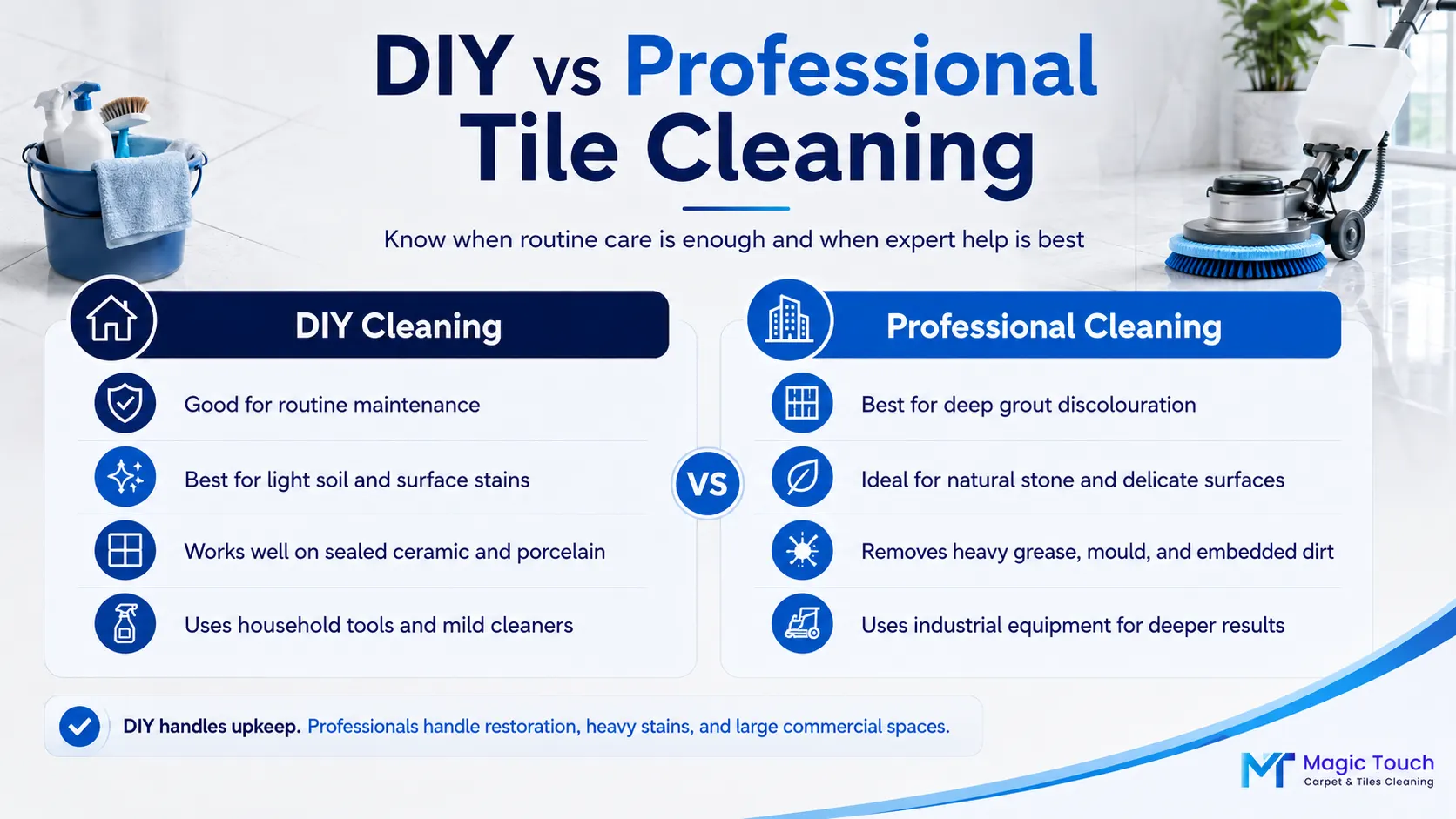
Choosing between professional and DIY cleaning depends on stain severity, tile type, and equipment availability. Some situations require specialised tools and technical expertise.
Professional services use industrial-grade machines, while DIY cleaning relies on household products and manual tools. The decision should be based on risk and complexity rather than cost alone.
When DIY Is Enough
DIY tile cleaning works for routine maintenance and minor stains. Ceramic and porcelain tiles tolerate standard household cleaners when used properly.
Light grease, dust buildup, and surface grime respond well to damp mopping and mild scrubbing. Homeowners who follow consistent schedules often prevent major issues.
DIY methods are suitable when:
- Stains remain surface-level
- Grout discolouration is minor
- Tiles are sealed and undamaged
- No structural water damage exists
Routine care handled at home reduces the need for professional intervention.
When to Hire Professionals
Professional tile cleaning becomes necessary when stains penetrate deeply or when tile material is sensitive. Natural stone restoration, heavy grout discolouration, and large commercial floors require specialised tools.
Industrial scrubbers, hot water extraction machines, and polishing systems provide deeper results than household equipment. Restoration of etched marble or deeply stained grout often requires technical expertise.
Commercial properties benefit from professional cleaning because consistent high traffic accelerates wear. Data from building service contractors shows that structured professional maintenance improves floor lifespan and reduces long-term repair cost.
Professional intervention protects investment and ensures safe treatment for delicate materials.
Conclusion
Tile cleaning is not a single process but a system shaped by material, surface finish, stain type, and environment. Ceramic, porcelain, natural stone, quarry, and terracotta each require different care methods. Cleaning approaches range from dry sweeping and damp mopping to steam, chemical treatment, and professional restoration.
Frequency also matters. Daily debris removal, weekly surface cleaning, monthly deep scrubbing, and annual professional service work together to protect both appearance and structural integrity. Preventive maintenance reduces long-term cost and extends tile lifespan.
- Related Blog: Complete tile and grout cleaning guide
