


Carpets collect soil, dust, pollen, pet dander, food residue, moisture, and odour-causing particles deep inside the fibres with daily use. EPA states that people spend about 90% of their time indoors, where indoor surfaces affect overall cleanliness and pollutant exposure.
Better Homes & Gardens recommends deep carpet cleaning every 12 to 18 months for most homes and every 6 to 12 months for homes with pets, children, heavy foot traffic, or allergy concerns.
Regular carpet cleaning helps remove embedded dirt, reduce odours, maintain carpet appearance, and slow fibre wear caused by trapped abrasive soil.
In this guide, I will explain what carpet cleaning is, how each method works, which method suits different carpet fibres, how often carpets need cleaning, what professional carpet cleaning costs, and when to choose DIY or professional service.
What Is Carpet Cleaning?

Carpet cleaning is the process of removing dirt, stains, dust, allergens, odours, and deep soil from carpet fibres. It uses vacuuming, pre-treatment, stain removal, agitation, rinsing, extraction, and drying to make carpets cleaner, fresher, and easier to maintain.
Carpet cleaning goes deeper than normal vacuuming. Vacuuming removes loose dust and dry soil from the carpet surface, but deep cleaning removes oily residue, spills, pet dander, trapped particles, and soil that settles inside the pile.
The Carpet and Rug Institute says proper vacuuming removes most dry soil, but carpets still need periodic deep cleaning because hidden dirt stays below the surface.
Professional carpet cleaners inspect the fibre type, stain level, backing, room use, and drying condition before choosing a method. Proper cleaning also protects carpet fibres from abrasive soil that causes dullness, matting, and early wear.
5 Main Types of Carpet Cleaning Methods
Carpet cleaning methods are different ways to remove soil, stains, odours, and residue from carpet fibres. Each method uses a different level of water, heat, cleaning solution, agitation, drying time, and equipment.
The right carpet cleaning method depends on the carpet fibre, soil level, stain type, room use, and how soon the carpet needs to be dry.
The 5 main types of carpet cleaning methods are:
- Hot water extraction or steam cleaning
- Dry carpet cleaning
- Bonnet cleaning
- Carpet shampooing
- Encapsulation cleaning
Homeowners often choose hot water extraction for deep cleaning. Commercial buildings often use encapsulation or bonnet cleaning because these methods dry faster and reduce downtime.

1. Hot Water Extraction or Steam Cleaning
Hot water extraction is a deep carpet cleaning method that sprays hot water and cleaning solution into the carpet, loosens dirt, and removes the dirty water with strong suction. People often call it steam cleaning.
Hot water extraction works well for deep soil, pet stains, odours, and traffic lanes. The cleaner usually pre-vacuums, applies a pre-spray, agitates the carpet, then extracts soil and water into a recovery tank.
Drying time is the main drawback. Carpet thickness, airflow, humidity, fibre type, and extraction quality affect drying. This method suits many nylon, polyester, polypropylene, and blended carpets. Wool needs lower heat and wool-safe products.
2. Dry Carpet Cleaning
Dry carpet cleaning is a low-moisture method that uses absorbent powder, compound, or cleaning agents to collect soil from carpet fibres. The carpet is then vacuumed to remove the cleaning material and attached dirt.
Dry cleaning is useful when fast drying matters. Apartments, hotels, offices, rental homes, and busy rooms often use it because the carpet returns to service quickly.
Dry carpet cleaning works best for light soil, delicate carpets, and routine maintenance. It is not the best choice for deep odours, heavy pet urine, sticky spills, or long-term soil buildup.
3. Bonnet Cleaning
Bonnet cleaning is a surface cleaning method that uses a rotary machine and absorbent pad to clean the top layer of the carpet. The pad absorbs soil after a cleaning solution is applied.
Bonnet cleaning is common in commercial spaces because it is fast and improves appearance quickly. Offices, hotels, corridors, and reception areas use it between deeper cleanings.
Bonnet cleaning does not remove deep dirt from the lower pile. It is not ideal for thick residential carpets, deep stains, pet odours, or allergy-focused cleaning.
4. Carpet Shampooing
Carpet shampooing uses foaming detergent and brush agitation to loosen soil from the carpet. After drying, the loosened soil and residue are vacuumed away.
This method helps heavily soiled carpets, but residue is the main risk. Too much detergent can leave a sticky feel and attract dirt faster.
5. Encapsulation Cleaning
Encapsulation cleaning uses a low-moisture polymer solution that surrounds soil particles as it dries. Vacuuming then removes the dried soil crystals.
Encapsulation works well for commercial maintenance because it dries fast and reduces downtime. It is not the best option for severe stains, urine contamination, or years of deep soil buildup.
Carpet Cleaning Method Comparison Table
Different carpet fibres need different cleaning methods because each material reacts differently to heat, moisture, chemicals, agitation, and drying time. Wool needs gentle cleaning. Nylon handles deep cleaning well. Polyester and polypropylene need strong soil removal for oily residue. Blended carpets need a method based on the most sensitive fibre in the mix.
The most common carpet types are:
- Wool carpets: Natural, soft, warm, and more sensitive to moisture and harsh chemicals.
- Nylon carpets: Durable synthetic carpets used in homes and commercial spaces.
- Polyester carpets: Soft synthetic carpets that resist many water-based stains but attract oily soil.
- Polypropylene carpets: Also called olefin carpets, often used in basements, rentals, and commercial areas.
- Blended fibre carpets: Carpets made from two or more fibres, such as wool and nylon or polyester blends.
The table below shows which carpet cleaning method works best for each carpet type and why.
| Carpet Type | Best Cleaning Method | Why This Method Works Best | Use With Caution | Main Cleaning Note |
| Wool carpets | Low-moisture cleaning or controlled hot water extraction | Wool needs gentle cleaning, controlled moisture, wool-safe detergent, and careful drying. | High heat, strong alkaline chemicals, overwetting, aggressive scrubbing | Always test colourfastness and follow the manufacturer’s cleaning instructions. |
| Nylon carpets | Hot water extraction | Nylon is durable and responds well to deep cleaning, soil flushing, and pile restoration. | Excess detergent or poor rinsing | Best for homes, offices, stairs, hallways, and heavy traffic areas. |
| Polyester carpets | Hot water extraction with proper pre-treatment | Polyester feels soft but holds oily soil, so pre-spray, agitation, and full rinsing help remove traffic lane buildup. | Weak cleaning, surface-only methods, residue left in the fibres | Works best when oily marks and high-use areas are treated before deep cleaning. |
| Polypropylene carpets | Encapsulation, bonnet cleaning, or controlled hot water extraction | Polypropylene resists moisture and many stains, but oily soil bonds strongly to the fibre. | High heat and poor agitation | Needs the right detergent and cleaning action to remove dark traffic lanes. |
| Blended fibre carpets | Method based on the most sensitive fibre in the blend | Blended carpets react differently depending on whether the mix includes wool, nylon, polyester, or other fibres. | Using one standard method without fibre testing | Professional inspection is important before choosing the cleaning method. |
Benefits of Professional Carpet Cleaning
Professional carpet cleaning improves carpet appearance, removes deep dirt, reduces odours and allergens, protects carpet fibres, and helps keep indoor spaces cleaner. Regular vacuuming removes loose dust, but professional cleaning reaches soil trapped deeper inside the pile.
Carpet collects dust, pollen, pet dander, hair, food crumbs, outdoor dirt, body oils, and moisture over time. These particles stay inside the fibres until proper cleaning removes them.

Improves Carpet Appearance
Professional carpet cleaning makes carpets look fresher by removing dull soil, traffic marks, stains, and sticky residue. Clean fibres reflect light better, so the carpet often looks brighter and more even after cleaning.
High-traffic areas such as hallways, stairs, living rooms, office walkways, and reception areas collect more dirt than quiet rooms. Deep cleaning helps restore the carpet’s original look when the fibres are not permanently damaged.
Removes Deep Dirt from Carpet Fibres
Professional carpet cleaning removes dirt that settles below the surface. Outdoor grit, sand, oils, pet soil, and food residue can sink deep into the carpet and damage fibres with daily foot pressure.
Deep soil acts like fine sandpaper. Over time, it causes matting, dullness, rough texture, and early wear. Professional extraction, rinsing, and agitation help remove this hidden dirt more effectively than basic vacuuming.
Helps Reduce Allergens and Odours
Professional carpet cleaning helps reduce trapped dust, pollen, pet dander, and odour-causing residue. Cleaning does not cure allergies, but it removes one major place where indoor irritants collect.
Pet smells, food spills, dampness, and smoke odours often come from residue inside the carpet, not only from the surface. Professional cleaning targets the source instead of only covering the smell.
Extends Carpet Lifespan
Professional carpet cleaning helps carpets last longer by removing dirt, grit, and oily residue before they damage the fibres. Every step pushes tiny soil particles deeper into the carpet, and those particles slowly wear down the pile. Regular deep cleaning reduces that friction and helps the carpet keep its colour, softness, and texture for a longer time.
Supports a Cleaner Indoor Environment
Clean carpets make homes, offices, rental properties, hotels, and clinics feel fresher and better maintained. Carpet cleaning also removes trapped dust, pet dander, odours, and everyday soil. The best result comes when professional cleaning is supported by regular vacuuming, fast spill treatment, entry mats, and a planned deep-cleaning schedule.
How Often Should Carpets Be Cleaned?
Carpets should be professionally cleaned every 6 to 18 months, depending on foot traffic, pets, children, allergies, rental use, and commercial activity. Low-use rooms need less cleaning, while busy homes and commercial carpets need a tighter cleaning schedule.
Vacuuming keeps the surface clean, but deep cleaning removes soil, oils, odours, and allergens that settle lower in the carpet fibres. Better Homes & Gardens recommends weekly vacuuming and deep cleaning every 12 to 18 months for many homes, with busier homes needing cleaning every 6 to 12 months.
Below is a practical carpet cleaning schedule based on real household and commercial use.

| Carpet Use Type | Vacuuming Schedule | Professional Deep Cleaning Schedule | Best Time to Clean | Why This Schedule Works |
| Low-traffic rooms | Once a week or every 2 weeks | Every 12 to 18 months | Spring or before guests arrive | Light-use carpets still collect dust, skin flakes, and airborne dirt over time. |
| Normal family home | 1 to 2 times per week | Every 12 months | Once a year | Daily walking, food crumbs, and outdoor dust slowly build up inside the fibres. |
| Homes with children | 2 to 3 times per week | Every 6 to 12 months | After school holidays or before winter | Children increase spills, food marks, mud, and floor contact. |
| Homes with pets | 2 to 4 times per week | Every 6 to 12 months | Spring and autumn | Pet hair, dander, saliva, body oils, and odours settle into the carpet pile. |
| Homes with multiple pets or pet accidents | 3 to 5 times per week | Every 3 to 6 months | After shedding seasons or accident problems | Pet urine, odour, and dander need faster treatment before they reach the backing. |
| Allergy-sensitive homes | 2 to 4 times per week with a good filter vacuum | Every 3 to 6 months in busy rooms, every 6 to 12 months elsewhere | Before pollen season and after high pollen months | Dust, pollen, dander, and fine particles collect in carpet fibres. |
| Rental properties | Before and after tenancy | At every tenant change, plus every 6 to 12 months for long leases | Move-in and move-out periods | Cleaning supports inspection, deposit records, odour control, and move-in readiness. |
| Low-traffic offices | 2 to 3 times per week | Every 6 to 12 months | Quiet business periods | Office carpets collect shoe soil, dust, and chair-wheel marks. |
| High-traffic commercial carpets | Daily or near daily | Monthly, quarterly, or every 3 to 6 months | After peak traffic periods | Corridors, receptions, hotels, clinics, and retail areas collect soil faster than homes. |
How Much Does Carpet Cleaning Cost?
Carpet cleaning in Australia usually costs from $25 to $75+ per room, $40 to $60 per hour, or around $3 to $8 per square metre for commercial carpet cleaning, depending on the job type, carpet condition, cleaning method, and location.
The table below gives a practical AUD price guide for common carpet cleaning jobs in Australia. These prices are general market ranges, so the final quote may change by suburb, carpet condition, access, minimum call-out fee, and add-on services.
| Pricing Type | Typical AUD Range | Best For | What Usually Affects the Price |
| Small bedroom | $25 to $45 per room | Standard residential carpet cleaning | Room size, access, stains, minimum booking fee |
| Standard bedroom | $35 to $60 per room | Family homes, rental rooms, apartments | Soil level, carpet type, furniture, location |
| Living or dining room | $50 to $90 per room | Larger rooms and high-use areas | Room size, traffic lanes, furniture moving |
| Study or small room | $25 to $40 per room | Small office, study, nursery | Light soil, size, minimum service charge |
| Hallway | $25 to $45 | Entry paths and walkways | Length, traffic marks, stains |
| Stairs | $45 to $80 per staircase | Homes, townhouses, rentals | Number of steps, hand tool work, soil level |
| Whole 3-room package | $135 to $180 | Small homes or apartments | Room size limit, provider package terms |
| 3 average rooms with hot water extraction | Around $149+ | Basic professional steam cleaning | Often excludes furniture removal and heavy soil |
| Hourly carpet cleaning | $40 to $60 per hour | Small jobs or mixed cleaning tasks | Labour time, access, equipment, job complexity |
| Commercial carpet cleaning | $3 to $8 per sqm | Offices, clinics, retail, strata areas | Floor area, traffic level, after-hours work |
| Carpet dry cleaning | From $45+ | Delicate fibres or fast-drying needs | Fibre type, soil level, product type |
| Pet stain or odour treatment | $20 to $80+ extra | Pet urine, odour, dander problems | Severity, urine depth, enzyme treatment |
| Deodorising | $20 to $60+ extra | Smelly carpet, pets, food odours | Odour source, room size, treatment type |
| Stain protection | $20 to $80+ extra | Homes with kids, pets, rentals | Area size, protection product, fibre type |
| Heavy soil or excess hair removal | Extra charge | Pet homes, neglected carpets, rentals | Extra labour, pre-treatment, vacuuming time |
| Furniture moving | Free to extra charge | Furnished rooms | Furniture weight, number of items, provider policy |
How Professional Carpet Cleaning Works
Professional carpet cleaning follows a step-by-step process to remove dry soil, stains, odours, and embedded dirt from carpet fibres. A cleaner first checks the carpet, then prepares the surface, treats spots, deep cleans the pile, removes residue, and dries the carpet properly.
Each step matters because carpets react differently to water, heat, cleaning solution, and agitation. Wool, nylon, polyester, polypropylene, and blended fibre carpets need different cleaning care.

1. Carpet Inspection
Carpet inspection helps the cleaner understand the carpet type, soil level, stains, traffic lanes, odour, fibre condition, and moisture risk before cleaning starts. This step prevents the wrong cleaning method from damaging the carpet.
The cleaner also checks old stains, bleach marks, burns, colour loss, and worn areas. Some marks improve after cleaning, but permanent damage may not fully disappear.
2. Pre-Vacuuming
Pre-vacuuming removes dry soil, dust, hair, grit, crumbs, and loose debris before wet cleaning begins. Dry soil is easier to remove before water touches the carpet.
This step also helps the deep cleaning machine work better. Homes with pets, offices, stairs, hallways, and entry areas need careful vacuuming because these areas collect more hair, sand, and outdoor dirt.
3. Stain and Spot Treatment
Stain and spot treatment prepares problem areas before deep cleaning. The cleaner applies a suitable product to stains from coffee, tea, food, grease, mud, ink, urine, or traffic soil.
Each stain needs the right treatment. A cleaner may let the product sit for a few minutes so it breaks down the stain before extraction. Gentle agitation helps without damaging the pile.
4. Deep Cleaning
Deep cleaning removes embedded soil from the carpet fibres using hot water extraction, dry cleaning, encapsulation, shampooing, or bonnet cleaning. The chosen method depends on carpet type, stain level, drying need, and room use.
Hot water extraction is common for homes because it rinses and extracts deep dirt. Encapsulation and bonnet cleaning are common in commercial spaces because they use less moisture and dry faster.
5. Rinsing and Residue Removal
Rinsing and residue removal clear away cleaning solution, loosened dirt, and suspended soil from the carpet. This step is important because leftover residue can make carpet feel sticky and attract new dirt faster.
A clean carpet should feel soft, not tacky. Proper rinsing also matters in homes with children and pets because they spend more time close to the floor.
6. Drying and Final Check
Drying and final checking complete the cleaning process. The cleaner removes as much moisture as possible, improves airflow, checks remaining spots, grooms the pile, and makes sure the carpet is ready to use.
Drying time depends on fibre type, pile thickness, room airflow, humidity, and cleaning method. The cleaner may suggest fans, open windows, or limited foot traffic until the carpet is fully dry.
DIY Carpet Cleaning vs Professional Carpet Cleaning
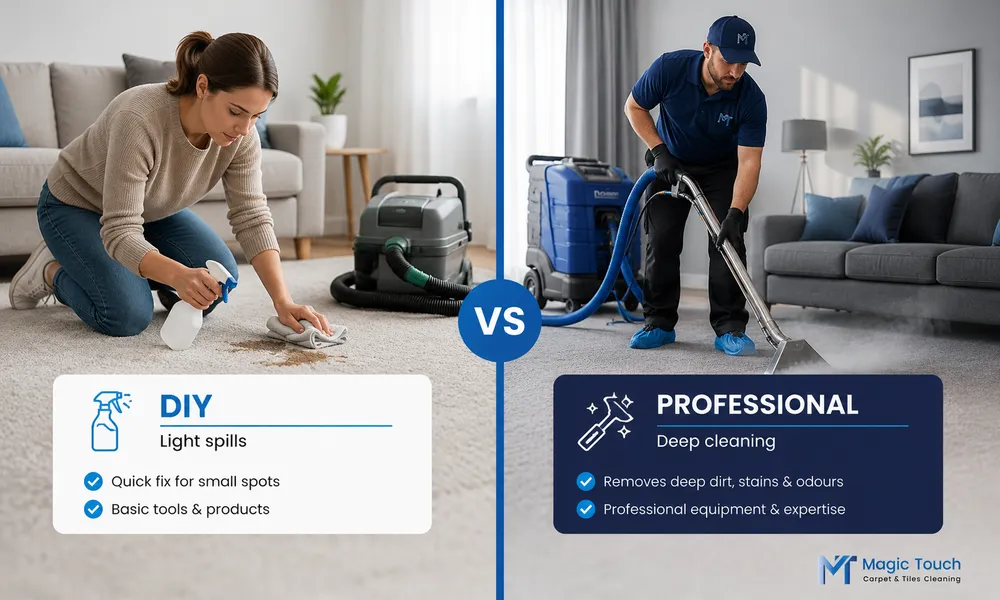
DIY carpet cleaning works for light dirt, small rooms, and fresh spills when the carpet is not heavily stained. Professional carpet cleaning is better for deep soil, pet odours, old stains, wool carpets, and high-traffic areas.
DIY machines cost less at first, but they often leave more water and residue behind. Professional cleaners use stronger extraction, safer products, and better drying control. Homeowners choose DIY for quick refreshes, while professionals give better results when carpet condition, indoor smell, or property appearance matters.
When Should You Clean Your Carpet Yourself?
You should clean your carpet yourself when the carpet has light soil, small fresh spills, low-risk synthetic fibres, and no deep odour or stain problem. DIY cleaning works best for quick refreshes between professional cleanings.
DIY carpet cleaning is practical for small apartments, single rooms, area rugs with washable care labels, and minor surface dirt. It also helps when a spill needs quick attention before a cleaner is available.
Fresh spills are the best DIY target. Blotting quickly with a clean cloth helps stop liquid from spreading into the backing. The IICRC consumer tip sheet notes that fresh spills are easier to handle than older spills, especially when moisture reaches padding or upholstery cushions.
DIY cleaning is also useful for maintenance in low-traffic homes. A homeowner may use a spot cleaner for small food marks, drink spills, or muddy footprints.
The safest DIY approach is simple:
- Vacuum first to remove dry soil
- Test cleaning product in a hidden area
- Blot spills instead of scrubbing hard
- Use less water, not more
- Extract as much moisture as possible
- Keep airflow moving until the carpet dries
When Should You Hire a Professional Carpet Cleaner?
You should hire a professional carpet cleaner when the carpet has heavy soil, pet odour, deep stains, allergy concerns, delicate fibres, rental turnover needs, or commercial traffic. Professional service is also better when the carpet must dry safely and look consistent.
Professional cleaning is worth it when the problem goes deeper than surface dirt. Pet urine, grease, old coffee stains, traffic lanes, smoke odour, and damp smells usually need more than a rental machine.
Wool and blended carpets also need expert care. A professional cleaner can check fibre type, test colourfastness, use safer products, and control moisture.
Commercial spaces need professionals because appearance affects customer trust. Offices, clinics, hotels, schools, rental units, and retail stores often need scheduled cleaning to protect flooring and reduce disruption.
Professional service is also smart before selling or renting a property. Clean carpets improve listing photos, buyer impressions, tenant satisfaction, and move-in readiness.
Hiring a professional cleaning company is also safer when carpet warranty matters. Some carpet warranties require professional cleaning on a set schedule and may specify approved cleaning methods.
A good professional cleaner does not only clean. The cleaner inspects, explains limits, protects furniture, chooses the right method, treats stains, removes residue, and gives aftercare advice.
How to Keep Carpets Clean After Cleaning
You keep carpets clean after cleaning by vacuuming regularly, treating spills quickly, using entrance mats, removing shoes indoors, and scheduling deep cleaning before heavy soil builds up. Aftercare helps the carpet stay fresh longer and reduces repeat staining.
Carpet cleaning gives the best result when daily habits support it. A freshly cleaned carpet can become dirty again fast if outdoor soil, food spills, and pet messes are not controlled.
EPA says regular vacuuming and periodic wet extraction help maintain carpet appearance, protect carpet life, and support indoor air quality.
Vacuum Regularly
Vacuum regularly to remove dry soil before it sinks deeper into the carpet pile. Weekly vacuuming is enough for many low-traffic homes, while busy homes and commercial spaces need more frequent vacuuming.
Better Homes & Gardens recommends weekly vacuuming and deep cleaning every 12 to 18 months for many homes. Homes with heavy traffic, pets, or allergy concerns often need deep cleaning every 6 to 12 months.
Vacuuming works best when done slowly. Fast passes leave soil behind. High-traffic areas need extra passes because grit settles deeper there.
A good vacuum also matters. Strong suction, a clean filter, and the right height setting help remove more soil.
Treat Spills Quickly
Treat spills quickly because fresh stains are easier to remove than old stains. Blot the spill with a clean cloth, work from the outside inward, and avoid hard scrubbing.
Hard scrubbing spreads the stain and damages the pile. Too much water may push the spill deeper into the backing.
The IICRC consumer tip sheet explains that liquid spills may reach the carpet pad and create lasting odour problems when not handled properly.
Use the right product for the stain type. Water-based spills, grease, urine, ink, and rust need different treatments.
When a stain is large, dark, oily, or smelly, call a professional before experimenting with multiple products. Mixing chemicals can set stains or damage the fibre.
Use Mats at Entry Points
Use mats at entry points to reduce outdoor soil before it reaches the carpet. Door mats catch grit, mud, dust, water, and small debris from shoes.
Entry areas collect the most soil because they connect outdoor and indoor spaces. A mat outside the door and another mat inside the entrance give better protection.
Commercial buildings need larger walk-off mats because foot traffic is heavier. Offices, shops, clinics, and hotels benefit from planned mat placement near entrances, lifts, and reception areas.
Mats also need cleaning. A dirty mat becomes a soil source instead of a soil barrier.
Remove Shoes Indoors
Remove shoes indoors to reduce the amount of dirt, grit, pollen, and outdoor residue tracked into the carpet. A no-shoe habit keeps carpets cleaner and reduces wear in traffic lanes.
Shoes carry soil from roads, parking lots, gardens, shops, and public floors. That material transfers to carpet with every step.
A shoe rack near the entrance makes the habit easier. Indoor slippers also help families stay comfortable without bringing outdoor soil inside.
This habit is especially helpful in homes with babies, pets, allergy-sensitive people, or light-coloured carpets.
Schedule Deep Cleaning at the Right Time
Schedule deep cleaning at the right time before carpets look heavily soiled. Waiting until the carpet looks dirty means soil has already built up deep in the pile.
Most homes need deep cleaning every 12 to 18 months. Busy homes, pet homes, allergy-sensitive homes, and high-traffic rooms often need cleaning every 6 to 12 months.
Commercial carpets need a planned schedule based on traffic. Reception areas, corridors, and entrances often need more frequent care than private offices.
Season also matters. Many homeowners clean carpets in spring, after winter dirt, or before holidays and guests arrive.
The right time is not always the cheapest time. The right time is before soil causes fibre wear, odour, or permanent stains.
Frequently Asked Questions
Can carpet cleaning help with allergies?
Yes, carpet cleaning can help reduce allergy triggers by removing dust, pollen, pet dander, dirt, and other trapped particles from carpet fibres. It does not cure allergies, but regular vacuuming and professional deep cleaning can make indoor spaces feel cleaner and fresher, especially in homes with pets, children, or heavy foot traffic.
Is carpet deodorizer safe for asthma?
Carpet deodorizer may not be suitable for everyone with asthma, especially if it contains strong fragrance, powders, or harsh chemicals. People with asthma or sensitive breathing should choose low-odour, asthma-friendly cleaning products and avoid heavily scented carpet sprays. For safer results, ask a professional cleaner to use gentle, non-toxic, and properly rinsed products.
How much does carpet cleaning cost in Wollongong?
Carpet cleaning in Wollongong usually depends on room size, carpet condition, stain level, access, and the cleaning method used. As a general guide, residential carpet cleaning may cost around $25 to $75+ per room, while larger homes, stairs, pet stains, deodorising, or stain protection may cost extra. The best way to get an accurate price is to request a quote based on your property.
Is professional carpet cleaning better than DIY?
Professional carpet cleaning is better for deep soil, pet odours, old stains, delicate fibres, rental properties, and high-traffic carpets. DIY carpet cleaning can work for light dirt and fresh spills, but professional equipment usually provides stronger extraction, better stain care, and safer drying control.
How do I choose the right carpet cleaning company in Wollongong?
Choose a carpet cleaning company in Wollongong by checking their experience, local reviews, cleaning methods, pricing transparency, insurance, and stain treatment process. A reliable company should explain the best method for your carpet type, give clear pricing, use safe products, and offer advice on drying time and aftercare.
Conclusion
Carpet cleaning removes dirt, stains, allergens, odours, and embedded soil from carpet fibres. The best method depends on carpet type, soil level, stain problem, drying needs, and whether the space is residential or commercial.
Hot water extraction gives strong deep cleaning for many carpets. Dry cleaning, bonnet cleaning, shampooing, and encapsulation also have value when matched to the right situation.
Professional carpet cleaning offers deeper soil removal, better stain handling, safer fibre care, and stronger extraction than most DIY machines. DIY cleaning still works for light soil and fresh spills when done carefully.
